
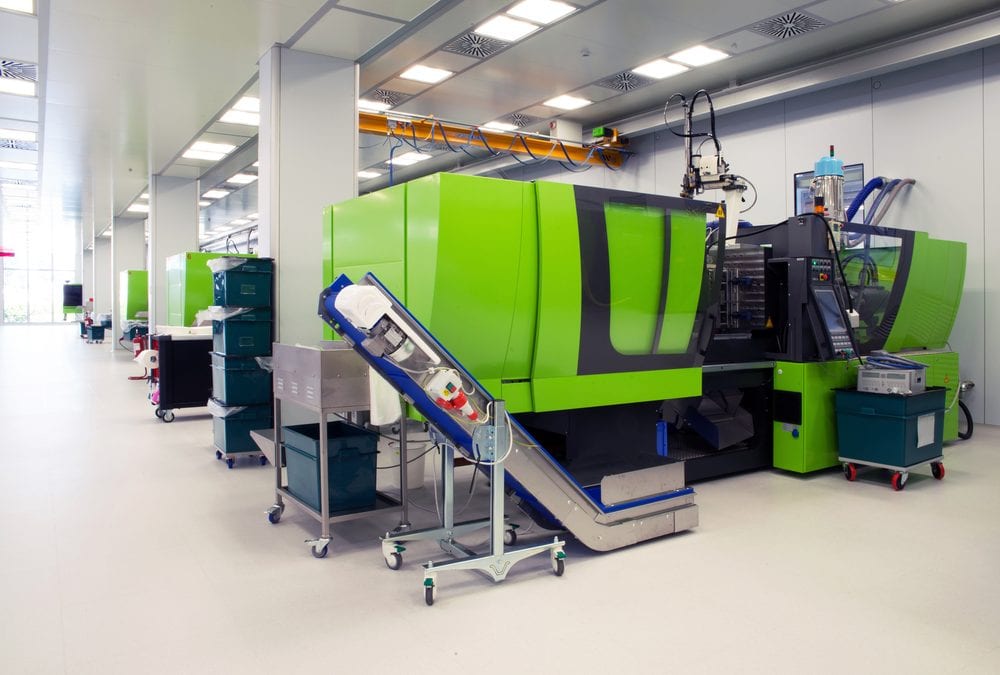
Plastic injection molding machines are some of the most common and important pieces of equipment in manufacturing today, producing a massive range of plastic products that we use in our everyday lives. How do plastic injection molding machines work, and what should you know about the process if you’re making an injection molding order?
At EnviroTech Custom Injection Molders, we’re proud to offer the best custom injection molding services on the market, producing a massive range of plastic parts for over a dozen different major industries. How do plastic injection molding machines work? Here’s a basic rundown.
Key Components
Here are the key components of a plastic injection molding machine:
Injection Unit
The section of the injection molding machine responsible for melting and injecting the plastic into the mold is known as the injection unit. The injection unit consists of a hopper, barrel, heater bands, and a reciprocating screw.
Clamping Unit
The section of the machine that holds the two halves of the mold together during the injection process. It includes a motorized clamp to open and close the mold, as well as various hydraulic cylinders to apply pressure to keep the mold closed during injection.
Mold
A critical component of any plastic injection molding system, this is where molten plastic is injected and cooled to form a specific shape or part. Molds can be made from steel or aluminum depending on factors such as production volume and the level of design consultation provided. They can also have multiple cavities, allowing for the production of more than one part at a time.
How Do Plastic Injection Molding Machines Work?
Here’s a basic rundown of the process for plastic injection molding machines:
- Material feeding: To begin with, plastic granules or pellets are fed into the machine’s hopper. This is typically done using a hopper loader that moves the material from a storage container to the machine.
- Melting: Once the plastic material is in the machine’s barrel, it undergoes heating and shear forces to melt it down. The heated screw within the barrel rotates and pushes the molten plastic towards the mold.
- Mixing: During the same heating process, the machine also mixes any added colorants, additives or reinforcing agents into the molten plastic. This ensures a uniform distribution of these materials throughout the final product.
- Injection: After the molten plastic is fully prepared, it is injected into the mold through a nozzle by the rotating screw. The injection process involves high pressure to ensure that all areas of the mold are filled completely.
- Cooling and solidification: Once the mold cavity is full, cooling channels in the mold help to rapidly lower its temperature so that the plastic can solidify. Depending on the complexity of the part being produced, this step can take anywhere from a few seconds to minutes.
- Ejection: After solidification, an ejector pin is used to remove the plastic part from the mold. This process can also be aided by air or hydraulic pressure.
- Trimming and finishing: Once the part has been ejected, it may undergo trimming and finishing processes to remove any excess material or improve its surface finish.
Additional Processes
Aside from the main injection molding process, there are additional processes that can be incorporated into the production of a plastic part. These include:
- Overmolding: In this process, two or more materials are molded together to create a single finished product. This technique is commonly used in the production of multi-colored or soft-grip handles.
- Insert molding: Similar to overmolding, insert molding involves inserting a pre-formed component into the mold before the plastic is injected. This allows for the integration of metal or other materials into the finished product.
- Gas-assisted molding: This process involves injecting nitrogen gas into the mold after the plastic has been injected. The gas helps to hollow out thick sections of the part, reducing material usage and improving strength.
- In-mold labeling: A technique where a label or graphic is placed inside the mold cavity before injection, resulting in a decorated part without post-production processes.
- Thermoforming: Instead of injecting plastic into a mold, thermoforming uses heat and pressure to form plastic sheets into desired shapes. This process is commonly used for creating packaging materials, trays, and disposable cups.
- Rotational molding: A method of creating large, hollow plastic parts by pouring liquid resin into a mold and then rotating it to evenly coat the interior. Once cooled, the part is removed from the mold, resulting in a uniform wall thickness and strong construction.
At EnviroTech Custom Injection Molders, we’re here to offer the best plastic injection molding services across numerous industrial needs. Contact us today to learn more about our full range of services and how we can help bring your plastic projects to life.