

Specific examples of applications in the food industry

Sugar industry
Membrane filter plates are now also being used for filtering sugar substitutes such as aspartame. This is a specialized application performed at extremely low temperatures. The membrane filter also needs to be made from a highly chemically resistant material as the slurries to be filtered can contain very high levels of hydrochloric acid.
Mash filtration
The membrane filter plates are subjected to constant temperatures of between 75°C and 80°C during filtration. Resistance to thermal aging is therefor a major factor in the choice of filter material.

Palm oil filtration
Refined, bleached palm oil undergoes cooling to around 20° C in a process of saturated fat crystallization. The crystal suspension is then filtered to acquire liquid olein. The filtration of edible oils produces extremely high electrostatic charges that usually result in membrane damage.
Envirotech has developed a special antistatic membrane material with excellent flex properties for palm oil extraction. The material provides a safe working environment and has been approved by the German Food and Feed Code (LMBG) for use in the food industry (German utility model: DE 29818048U1).
Damage to the membrane is prevented by discharging antistatic charges through an earth.
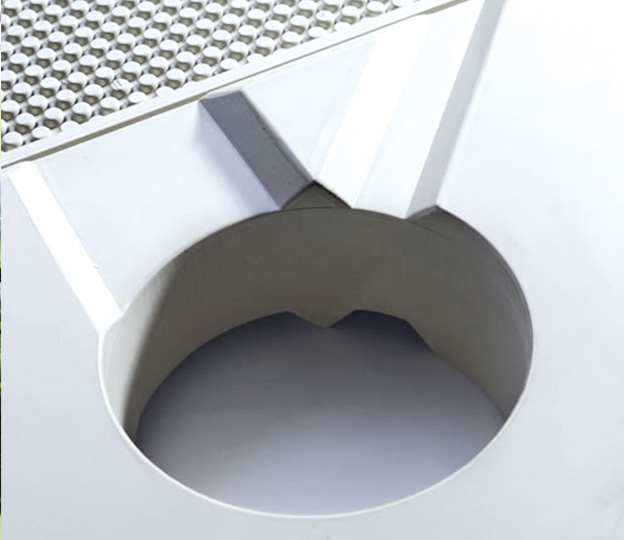
Even-level cake greatly affects squeeze efficiency and therefore profitability. To help achieve cake evenness, Envirotech membrane filter plates do not use staybosses on the filter surface but instead have a pipped structure on the membrane plate.
All Envirotech membrane plates and plate elements are available in such a configuration. The antistatic membrane material is also suitable for explosion-proofed areas of production. Envirotech is certified for the manufacture of ATEX zone membrane filter elements.
Envirotech membrane filter plates with antistatic membranes are also being used in the dual fractionation of soft stearines with crystallization temperatures of up to 55°C. Membranes made of standard materials suffer from major swelling at such temperatures.
The production of palm kernel oil involves a special type of fractionation. The intended product here, in contrast to normal palm oil fractionation, is stearine cake. To achieve the lowest possible iodine count in the stearine, as much oelic acid as possible needs to be squeezed out. Specially designed filter elements capable of squeeze pressures of up to 30 bar are therefore used at operational temperatures of below 10°C. The cake chamber needs to be restricted to 25mm, achieved using a combination of membrane and filter plates. Because the slurry is highly viscose, Klinkau use a specially designed dual feed.

Rice bran oil
A specially designed filtering process now makes coating unnecessary. The cooled wax suspension undergoes direct pressurized filtration, and membrane squeezing extracts any oil residues in the pores of the wax cake. This process significantly increases its profitability.

Soy sauce
To get the extract into a marketable state, polish filtration is then required to isolate very finely spread cloudy substances. Envirotech has developed special filter elements for this process which are set up in a filter tower formation.
Yeast
Selected yeast strains are cultivated in sugar solutions with 4–5 pH values and at temperatures from +2°C to +5°C depending on the strain. The fast growing and multiplying yeast cells then cause the suspension to become increasingly viscose by up to a 20% TS content. The yeast is then filtered through a filter press with the yeast cake undergoing squeezing. The cake’s solid content can then be increased from 30%–38% depending on subsequent processing requirements. TS content settings can be made from the squeeze pressures and times. The construction of the membrane plate is crucial because high hygiene levels require the filter elements to undergo frequent cleaning. The plate should therefore have no inaccessible areas for CIP procedures. For this application, Envirotech uses copolymere polypropylene which is highly resistant to flexing at low temperatures and provides long service lives for the membrane filter elements.